It is eight in the morning in the Franschhoek valley. The Drakenstein still has mist on it, the vines run out to the fence line, and there are four of you on a court that nobody else on the farm can book, because there is nobody else on the farm. Two more are already at the pool. Somebody is in the clubhouse with a coffee, half watching. Somebody else is in the sauna, two are still asleep, and one has walked down to the dam to see what the light is doing. None of it was arranged the night before. That is the whole proposition, and fewer farms in the Cape can actually deliver it than a search suggests.
A private wine estate villa with padel in South Africa means one thing: the court is on the property, it is yours for the week, and the estate is let to one group at a time. Everything else is detail. This piece covers where in the Cape to base a group, what a week actually looks like hour by hour, what the court is likely to be, and what the estates cost in rand.
Essentials
- Where
The Franschhoek valley, the Constantia wine route on the Cape Town side of the mountain, and the Klein Karoo on Route 62, twenty-five minutes from the Robertson cellars.
- Airport
Cape Town International. Bishopscourt about twenty-five minutes, Constantia about thirty, Franschhoek fifty minutes to an hour, Montagu two to three hours.
- Best months
November to March. Cape Town averages 28° in January and 17° in July, so the Cape summer runs exactly when the courts in Europe are closing for weather.
- Group size
Ten to twenty across the estates in the collection.
- Rate
R24,000 a night at Klipkuil to R195,000 at Paddakloof, both flat all year. Figures as at August 2026.
Which part of the Cape suits the trip
Franschhoek, if the wine farm is the point
Franschhoek is a valley of working farms ringed on three sides by mountains, and it is the strongest base if you want the estate itself to be the week rather than a place to sleep between outings.
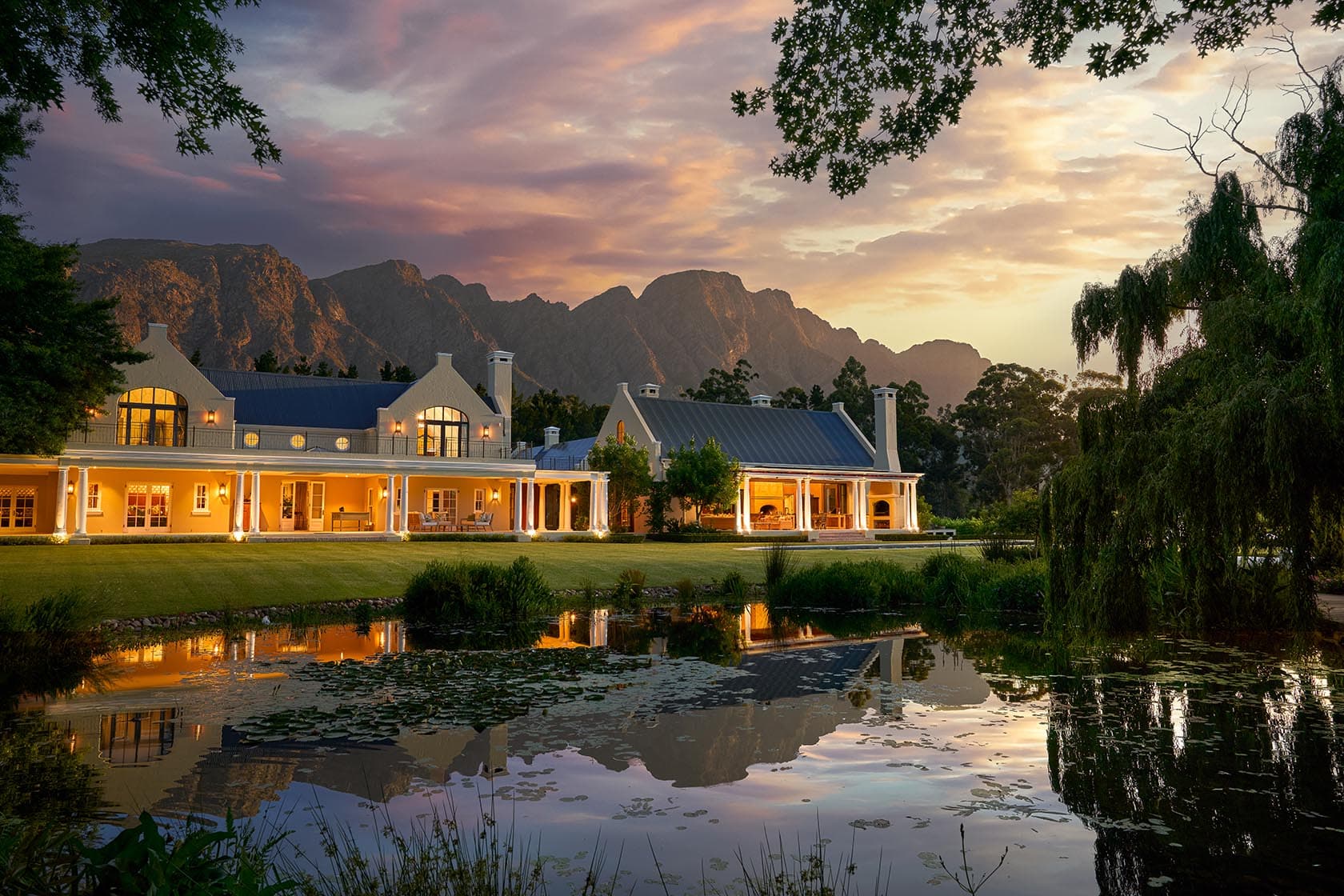
Paddakloof is the largest of them: a historic Franschhoek wine farm ringed by mountains, ten en-suite rooms for twenty, and a padel court with a clubhouse of its own, which is what turns the space between games into part of the day. There is a 27-metre heated eco-pool, a jacuzzi, two eco dams, koi and lily ponds, olive groves and a herb garden, and five e-bikes for the hours nobody wants to play. A chef and a concierge are included, and it is a working wine farm: vines and olive groves to the fence line, cellars on the property and tastings on request.
A few minutes down the valley, Oakvale Estate is the other Franschhoek farm with a court of its own. It is not listed in the collection, which is why that link goes to the estate site.
Twenty hectares between the Franschhoek and Drakenstein mountains, two villas taken together for twelve, and the court in the open ground between the vineyard and the paddocks. A chef in residence makes breakfast every day and then lunch or dinner, with the estate wine and olive oil on the table. A butler and a concierge run the week, and the airport transfer is inside the rate. Two tented villas are opening on the farm as well, Water’s Edge and Nature’s Lookout, four each in two king en-suites. Quiet hours run from six in the evening to six in the morning, and the answer the estate gives to what the nearest noise is: a donkey.
Constantia and Bishopscourt, the oldest vines in the country
These are still winelands, and older ones than Franschhoek. The Constantia wine route is the oldest in South Africa, planted in the 1680s, and it sits on the Cape Town side of the mountain rather than an hour inland. That is the trade: the same vineyards and tastings, with dinner in town and Kirstenbosch on a Tuesday within reach.
Villa Kilimani is a SAOTA-designed glass house on two hectares in Constantia, sleeping ten, with a court on the lawns inside the trees and a nature trail that runs from the gate to Kirstenbosch by a route most of Cape Town does not know. There is a resident butler, and a zip line, which between them cover both halves of most groups.
Villa Intaba sits fifteen minutes from the city in Bishopscourt: two and a half acres of acacia and old ficus, seven suites for fourteen, and a brand new padel court put in by the new owners alongside the squash court already on the grounds. The surface has never taken the week of another group. Two rackets in one villa is a useful thing when the sun is high and somebody wants a roof. The Constantia winelands are ten minutes down the road.
The Klein Karoo, on the long way round to the wine
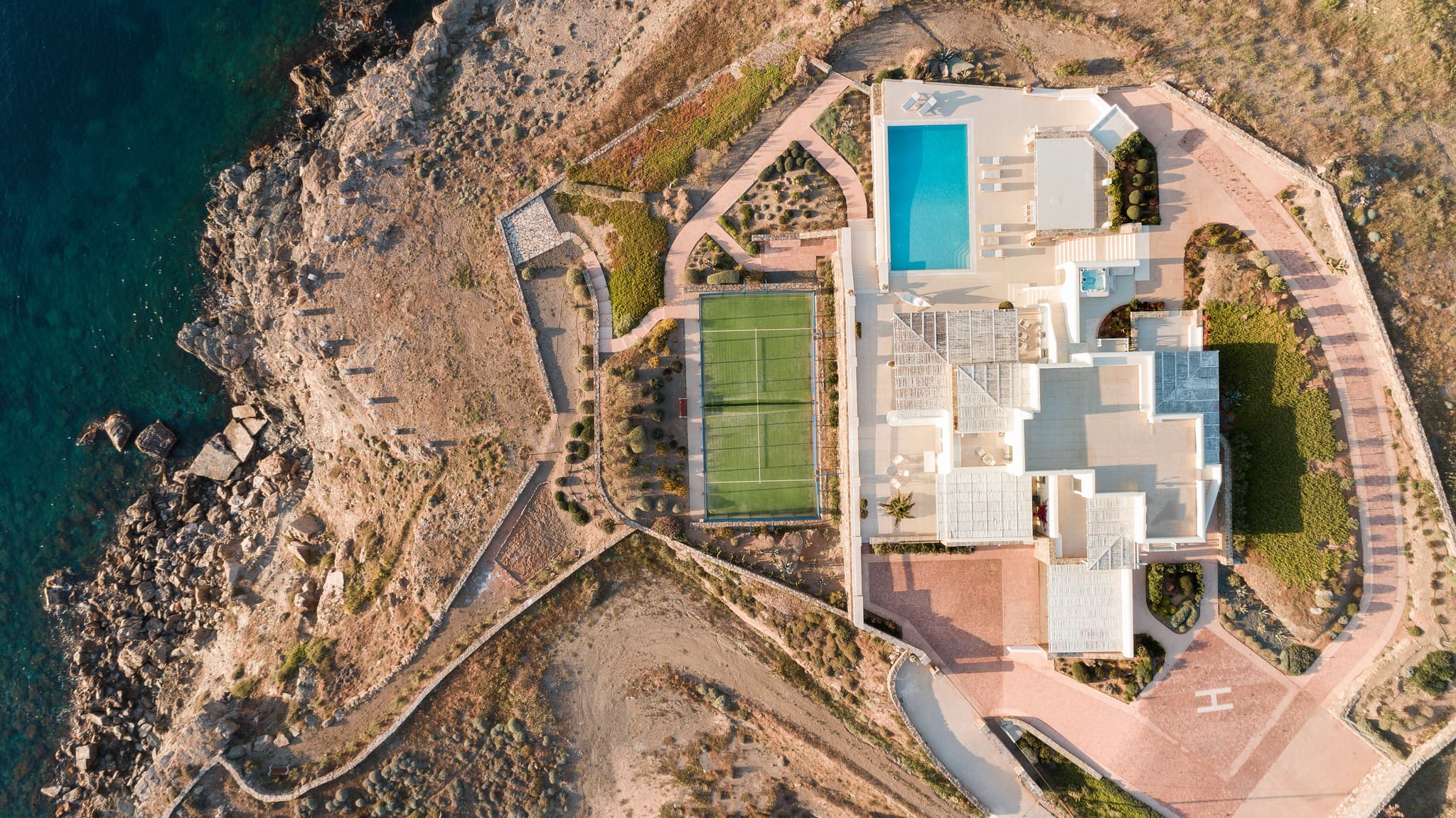
Klipkuil is a hundred and seventy-five hectares of Klein Karoo with three glass-and-timber villas set into it, sleeping twelve, two to three hours from Cape Town. The court is a blue hard court with glass ends and mesh sides, floodlit, cut into the hillside beside a six-hole putting course, and the surface spec is still being confirmed with the owner. Meerkats and tortoises keep the timetable.
Klipkuil is self-catering by design: the kitchens, the braai and the pizza oven are yours and there is no estate chef, which is worth saying out loud before a group that wants a butler books it. It is the other kind of Cape quiet: no traffic, no sea, and at night more stars than most groups have seen at once. It is also wine country of a different sort. Montagu sits on Route 62, and the Robertson valley and its cellars are about twenty-five minutes away, which puts a tasting within easy reach of a morning on the court.
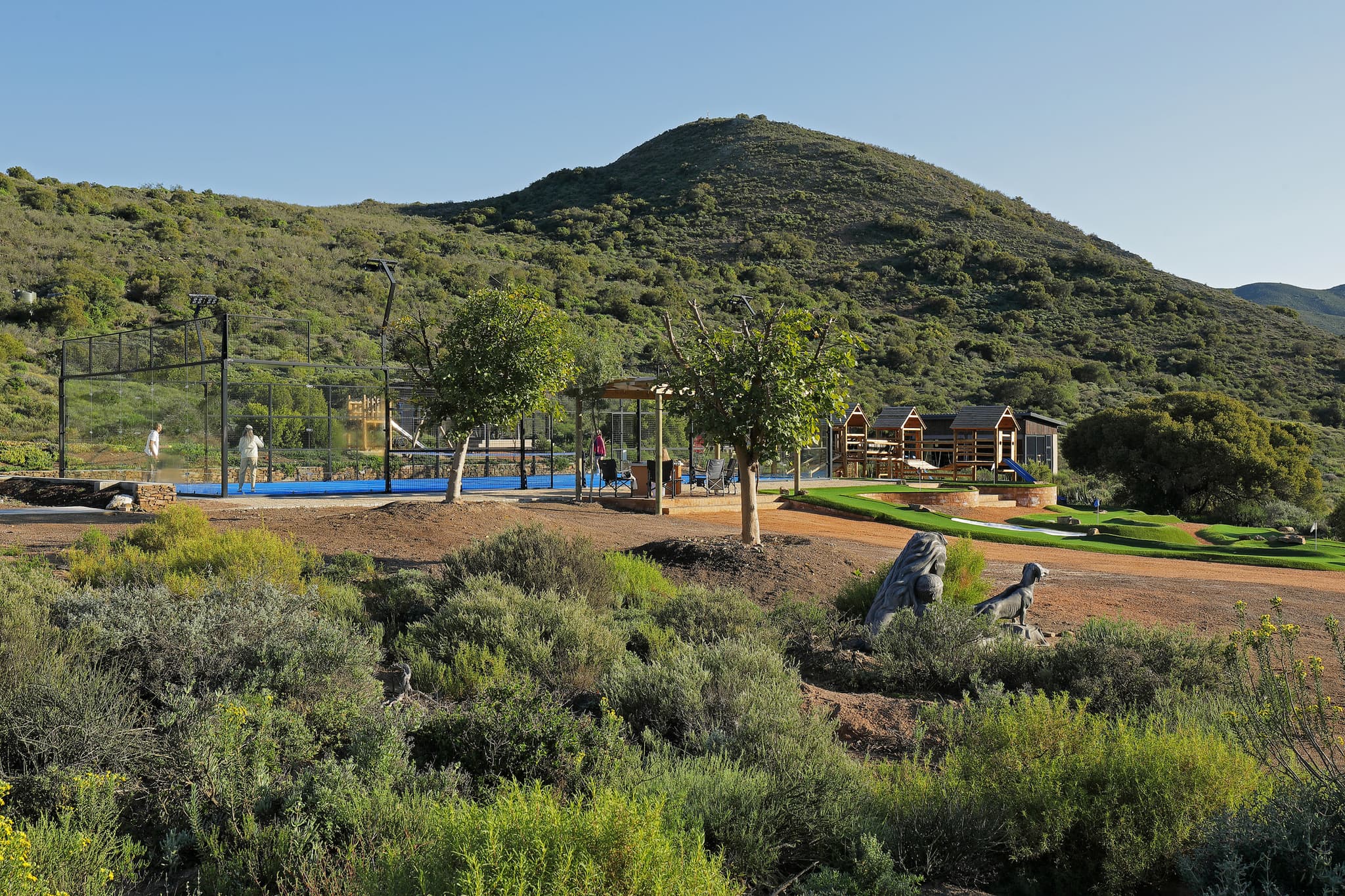
What the week actually looks like
Morning, before the valley warms up
The best session of the day is between half seven and half nine. The light is clean, the mist is still on the mountains, and a private court means nobody is waiting on the hour. That is the real difference from a club at home.
Surfaces vary. The court at Klipkuil is a blue hard court, and the others are set out on each villa page. Where a surface, the glass or the floodlighting has not been confirmed with the owner, the villa page says so rather than guessing, because the answer is the reason someone got on a plane.
Middle of the day, which is for not playing
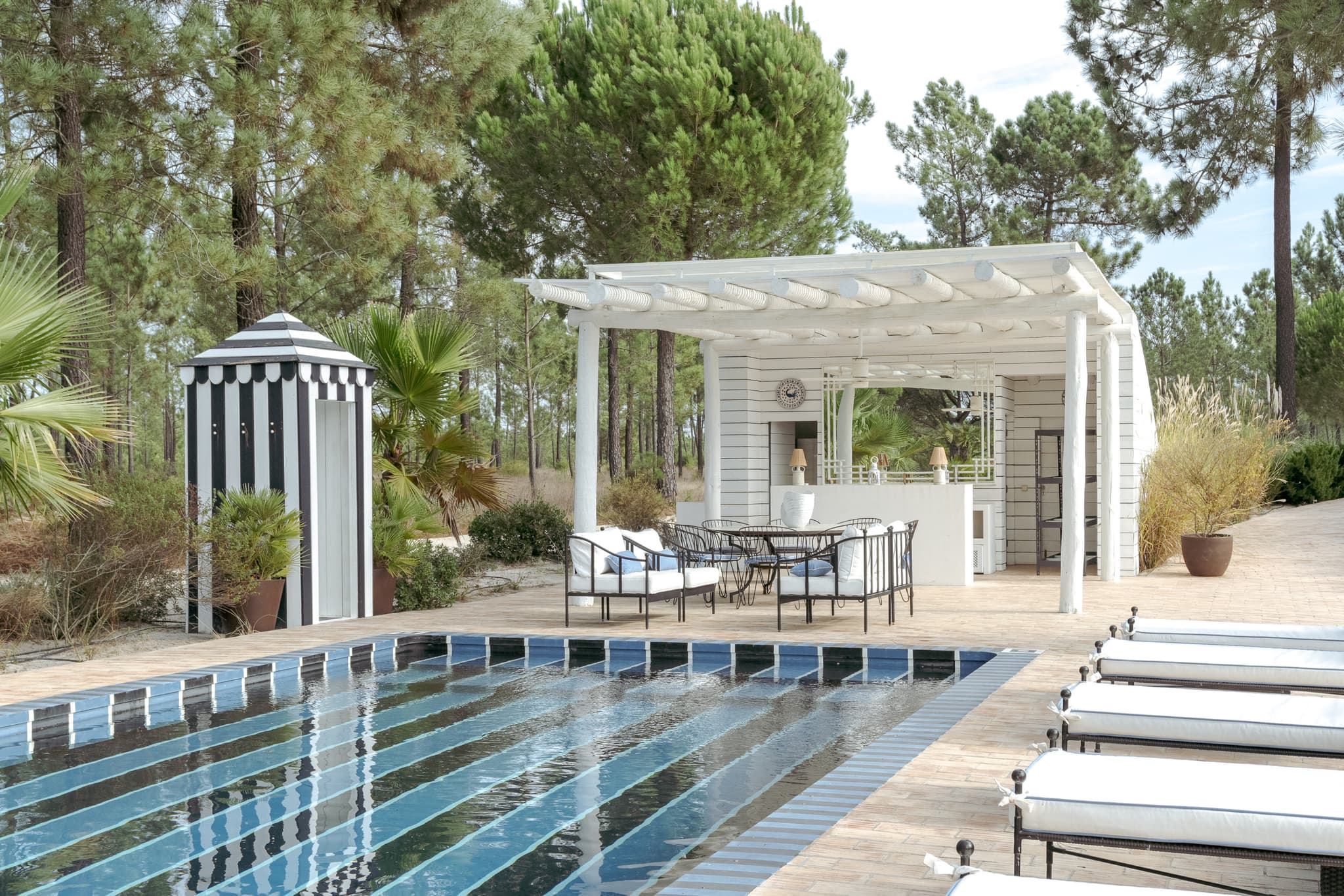
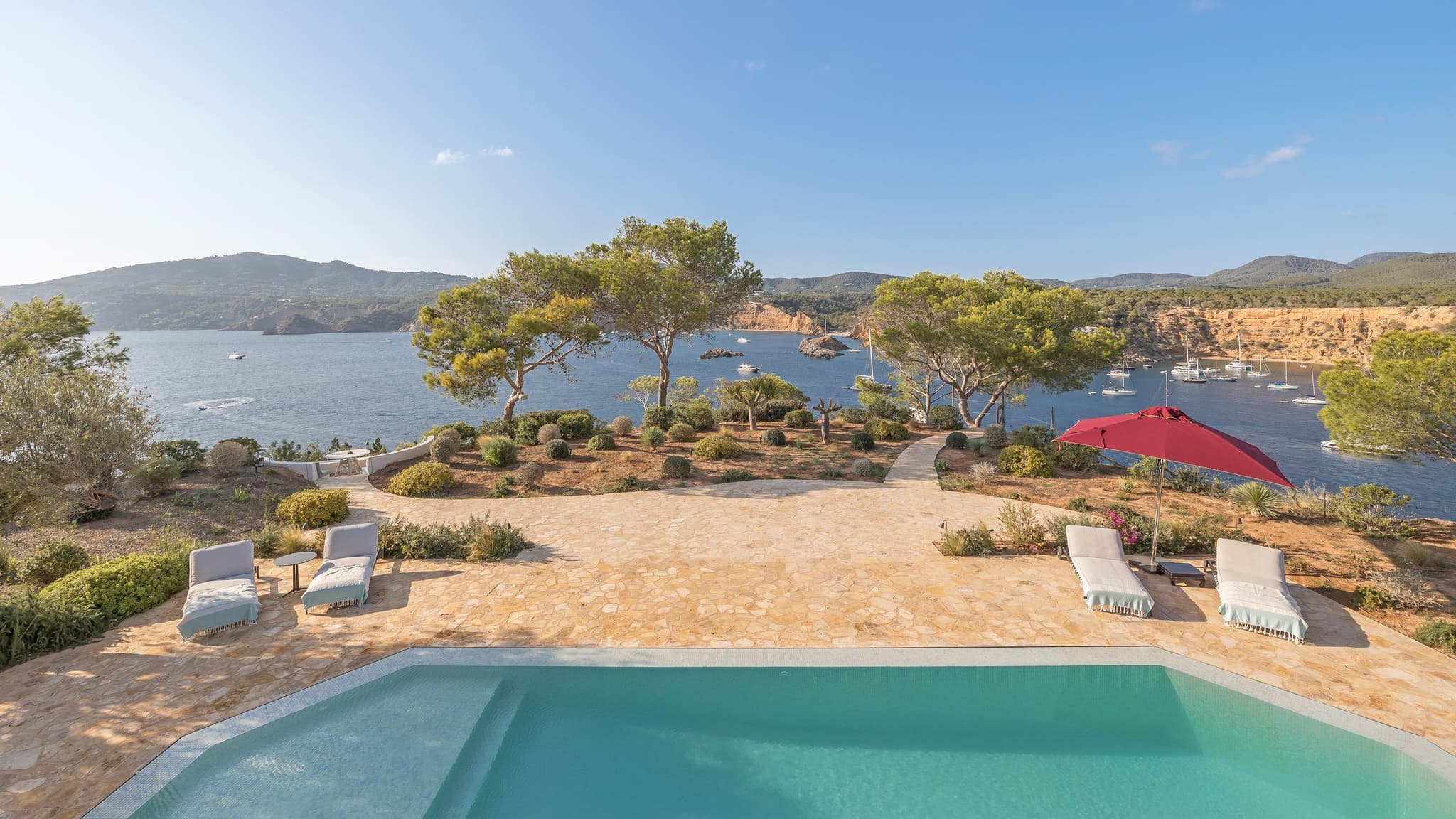
Cape summer afternoons are warm, and most groups let the court go quiet on its own. A cellar tasting, lunch in the shade, and a long stretch of pool. Paddakloof has 27 metres of heated water and a jacuzzi, Klipkuil gives each villa its own plunge pool and a wood-fired hot tub, and Oakvale has an eco pool with a shallow step and a boma bar under the pines by the river. The estates are built for those hours: shade, water, and nothing scheduled.
Evening, which is where the week earns itself
A chef on the estate, dinner outside, and wine that in several cases was made a few hundred metres from the table. Paddakloof carries a chef inside the rate. So does Oakvale, where it is breakfast every day plus lunch or dinner, with a winemaker on site and the estate olive oil in handmade clay bottles. Elsewhere in the collection a chef is quoted with the week rather than bundled into the rate, and the difference is worth asking about before you put two rates side by side.
The court, and what to ask about it
The gate for every villa in the collection is the same sentence: the court is on site, private, and good enough to play on twice in a day. No court, no entry, whatever else the villa has. A court a short drive away, a shared club court, or a tennis court someone has described loosely does not clear it.
Beyond the gate, four questions do most of the work on a Cape property.
- Is it glass or mesh at the ends
Glass changes how the ball comes off the back wall, and a week is long enough to notice.
- Is it floodlit
In the Cape summer this matters less than in Europe, because the light runs to nine. From April it matters a great deal.
- Which way does it face
A court that puts the sun in your eyes at six is a court you use at ten instead.
- Who else can book it
On a farm let to one group, nobody. On a farm with rooms let separately, somebody.
Coaching on Cape estates is arranged through the property and quoted with the week rather than bought by the hour. It is worth adding where the ability of the group is spread, because the advantage of padel is that a beginner and a club player can share a court and both enjoy it, and a coach gets a group to that point faster than the group will on its own.
What it costs
Whole-estate hire in the Cape is quoted by the night and taken by the week. As at August 2026, across the collection: Klipkuil is R24,000 a night, flat all year, for twelve. Villa Kilimani runs R65,000 in the Cape shoulder and R110,000 across the summer peak, for ten. Oakvale is R152,500 and R179,000 for twelve, with VAT at 15% already inside the rate. Paddakloof is R195,000 a night, the same every week of the year, for twenty.
The Cape calendar runs against the European one. That is the reason the Cape is on this list at all.
Two things in that list are worth a second look. The flat-rate estates, Paddakloof and Klipkuil, turn the choice of week into a question about weather and the court rather than about money. And the seasons are opposite ways round: Cape Town averages 28° in January and 17° in July, against 15° in January on the Spanish villas. What a group does with that is its own business.
| Country | Jan | Feb | Nov | Dec |
|---|---|---|---|---|
| South Africa | 28° | 28° | 25° | 27° |
| Spain | 15° | 15° | 19° | 16° |
| Portugal | 15° | 16° | 18° | 15° |
Getting there
Cape Town International is the arrival point for all of it. Bishopscourt is about twenty-five minutes, Constantia about thirty, Franschhoek about an hour, and Montagu two to three. Groups arriving on the same flight generally take a pre-booked minibus or two vehicles, arranged with the estate or through the booking.
From London and most of western Europe it is an overnight flight with no time difference worth the name, which is the quiet reason the Cape works as a padel week and the Caribbean does not. From North America it is a connection, usually through a European hub or Johannesburg.
Why padel, and why here
Padel is now an amenity the best hotels in the world compete on, and the numbers behind that are in the note below.
South Africa came to it late and quickly. The sport arrived in 2020, and the first courts in the country went in at Val de Vie in Paarl, which is to say in the Winelands, on a wine estate, for private use. By late 2024 the player count was put at around 100,000, with about 80% of them in Gauteng and the Western Cape. The courts on Cape wine farms are not a trend arriving from Europe. They are where the sport started here.
Every villa in the collection is read under the same structure before it appears: the court as the gate, then seven categories in the same order, from the villa as a place for a group to the feeling of the week. There are no scores. It is good enough to be here, or it is not. For a group choosing between two Cape estates, that means the same seven headings on both pages instead of two sets of twelve photographs.
Frequently asked questions
Which South African wine estates have a private padel court?
Paddakloof in the Franschhoek valley is the wine farm in the collection, taken whole for twenty. Oakvale Estate is the other Franschhoek farm with a court of its own, and it is not listed in the collection, so it is linked above to its own site. Villa Kilimani in Constantia and Villa Intaba in Bishopscourt sit in the Cape Town green belt rather than on vineyards, and Klipkuil is in the Klein Karoo.
When is the best time to play padel in the Western Cape?
November to March. Cape Town averages 28° in January and 17° in July. High summer afternoons are hot enough that the sensible pattern is early and late on the court, with the middle of the day given to the water.
How many people do Cape estates with padel courts sleep?
Ten to twenty across the collection. Villa Kilimani sleeps ten, Klipkuil twelve, Villa Intaba fourteen and Paddakloof twenty. Oakvale, which is not in the collection, takes twelve across its two villas, with two tented villas of four opening on the estate.
What does a whole-estate booking include in the Cape?
At the estates that include it, a chef, concierge or butler service, daily housekeeping and the court itself with rackets provided. Airport transfers and coaching are usually quoted with the week rather than included. Ask which of the two you are looking at before comparing rates, because a rate with a chef inside it and a rate without one are not the same number.
Is the padel court included in the rate or charged by the hour?
On a whole-estate booking it is included. The court belongs to the property and the property is let to one group, so there are no hourly slots and nothing to book. That is the difference between an estate with a court and a hotel with courts.
How far is Franschhoek from Cape Town airport?
Fifty minutes to an hour by road, depending on the farm. Constantia is about thirty minutes and Bishopscourt about twenty-five, which is why groups who want the city as well as the court tend to base themselves on that side of the mountain.
Share this piece